Choosing the right Installer or Company
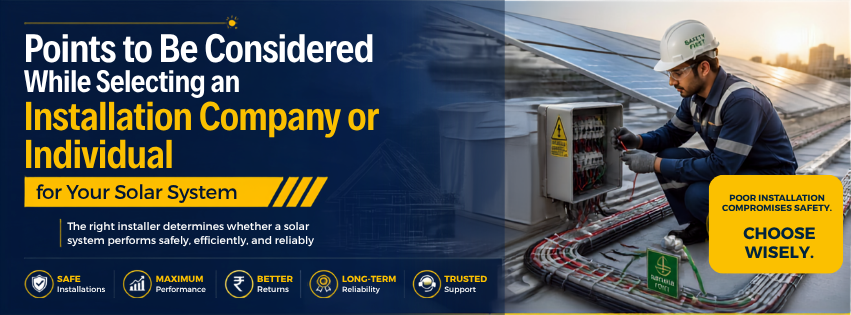
Points to Be Considered While Selecting an Installation Company or Individual for Your Solar System
The best solar panels and batteries in the world will still underperform — or fail outright — if installed incorrectly. Wiring mistakes, poor earthing, wrong angles, and mismatched components are among the most common reasons a solar system doesn't deliver its promised output. Choosing the right installer matters as much as choosing the right equipment. Here's what to actually check.
1. Licensing and certification
In Pakistan, look for installers holding an AEDB (Alternative Energy Development Board) licence and, where relevant, a PEC (Pakistan Engineering Council) registration. These aren't just paperwork — they're a baseline signal that the installer has met a minimum standard of technical competence and accountability.
2. Manufacturer-specific training
A general electrician is not the same as someone trained specifically on the panels, inverter, and battery brands going into your system. Ask whether the installer has received direct training from the brands they're installing — reputable brands run installer training programs precisely because incorrect installation is one of the most common causes of underperformance and warranty disputes.
3. A verifiable track record — not just claims
Ask to see actual completed projects: photos, video walkthroughs, addresses (with permission), or direct references from past customers. An installer confident in their work will have no hesitation showing you real, verifiable examples rather than stock imagery or vague testimonials.
4. Independent verification — not just self-reported reviews
Self-published reviews on an installer's own website or Facebook page are easy to curate. Look for installers whose credentials, site work, and customer feedback have been independently verified by a third party — through an actual site visit audit, not just a form they filled out themselves.
5. Team size and after-sales capacity
A one-person operation might be perfectly competent for the installation itself, but ask directly: who handles a fault call six months from now? What does after-sales support actually look like — team size, response time, and whether they offer any ongoing monitoring or maintenance service, not just a one-time install and disappear.
6. A proper site survey before quoting
Be cautious of any installer who provides a firm quote without visiting your site first. A proper installer should assess your roof structure, shading, panel orientation, existing electrical setup, and daytime load pattern before recommending a system size — especially now that net billing makes correct system sizing (for self-consumption, not just export) far more important than it used to be.
7. Transparency on what's included — and what isn't
Get a clear, itemized breakdown covering panels, inverter, battery (if applicable), mounting structure, breakers, cabling, earthing, lightning arrestors, and labour. Ask explicitly what happens if something needs replacing under warranty — is that visit free, or billed separately? Vague or verbal-only quotes are a common source of disputes later.
8. Willingness to explain, not just sell
A good installer will walk you through why they're recommending a particular system size, panel type, or battery brand for your specific situation — not just push whatever earns them the highest margin. If every question gets a generic sales answer rather than a specific technical explanation, that's worth noting.
The Crux
The panel and battery brand you choose only delivers its rated performance if it's installed correctly, wired safely, and sized to your actual usage. A verified, trained, and transparent installer is not an added expense — it's what determines whether the rest of your investment actually pays off.
Notes on sourcing
This article reflects general solar installation best practices widely documented across the industry — installer licensing requirements, manufacturer training programs, and system-sizing principles are standard guidance recommended by solar associations and equipment manufacturers globally. Specific licensing bodies referenced (AEDB, PEC) are Pakistan's recognized regulatory and professional bodies for the sector.